
Greek And Roman Deities On Coins-24
2026-02-09 Mon
In #ancient Greek religion, many deities were linked to #Healing and #Health. Each had their own unique powers, symbols, and rituals. One such figure is Epione, the goddess known for her ability to ease #pain. She is the wife of Asklepios/Asclepius, the god of #Medicine. To learn more about Asklepios, visit this link: Greek And Roman Deities On Coins-22. Epione is also the #mother of five children with Asklepios. They are referred to as the Asklepiades/Asclepiades. Their names are Hygeia (Good Health), Panakeia (Cure-All), Iaso (Healing), Aigle (Radiance), and Akeso (Curing).The origin of her name comes from the Greek word ‘epios,’ meaning ‘soothing.’ This highlights her role in providing the gentle care needed for #recovery. Epigraphical #evidence indicates that she held significance as a cultic figure in locations such as #Athens, Epidauros, Kos, and Pergamon.
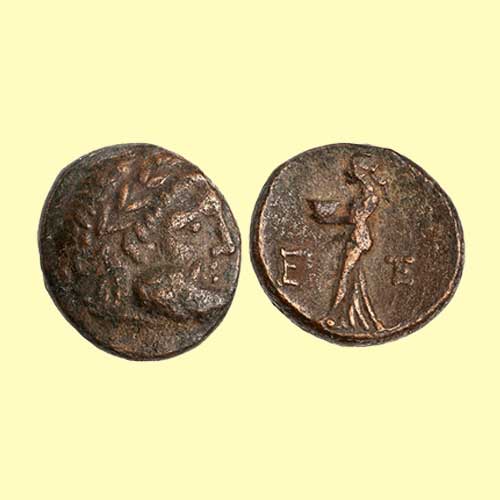
Images of Epione began appearing on coins in the 4th century BCE. The coin shown in this post is a Bronze Coin from Argolis in Epidauros, dated between 350 BCE and 300 BCE. Weighing 4.92 grams, the obverse features a laureate head of Asklepios facing right, while the reverse showcases Epione standing to the left, holding a phiale, a bowl used in ancient Greek rituals for pouring liquid offerings. Additionally, two monograms are found on either side of her figure.
Interestingly, the connection between deities and healing is also seen in #India. Dhanvantari, honored as the God of Ayurveda, is celebrated for promoting health and protecting against illness. Goddesses like Shitala and Mariamman are recognized for their roles in curing diseases such as cholera, smallpox, and chickenpox. This tradition reflects shared thoughts and beliefs among ancient Greece and ancient India!
Latest News
-
Extremely Rare Silver Quarter Tanka of Kachar Monarch Yasho Narayan, Owing Allegiance to Ghatotkacha Lineage
2026-06-23 TueHidden within the misty valleys and forested hills of Northeast India lies the story of the Kacha...
-
Gun and Sword on Silver Katra Taka of Independent Kingdom of Jaintiapur King Bar Gossain II
2026-06-22 MonThe Jaintia was a prominent medieval Independent Kingdom in Northeast India, ruled ...
-
Rare and Beautiful Gold Dinar of Gauda Ruler Shashanka
2026-06-19 FriThe Gauda dynasty was an ancient kingdom in the Gauda region of Bengal. It emerged as an independ...
-
Exceptional Gold Mohur of Ahom King Swargdeo Rajeshwar Singha
2026-06-19 FriThe Ahoms were ethnic group originating from the Tai people and founder of Assamese royal dynasty...
-
Heavy Lead Coin of Hiranyakas, King Khadakama
2026-06-18 ThuThe Hiranyakas were a local dynasty that rose in the mid-3rd century CE, in Rayalaseema region th...